Web Design
House2Home
House2Home is a startup e-commerce platform focused on helping people furnish and decorate their homes with stylish, affordable products. As the UI/UX Designer, I was tasked with solving a key user experience challenge using a modified Google Ventures (GV) Design Sprint, guiding the project from research and ideation to prototyping and validation.
Project Details
Location: Atlanta / Remote
Timeline: 2025 / 1 week
Role: UI/UX Designer
Project Type: E-commerce App
Industry: B2C
Prototype: House2Home prototype


Creative Process
To solve this challenge, I followed a modified Google Ventures (GV) Design Sprint. This structured framework accelerated the design process by guiding each stage, from understanding the problem and generating ideas to prototyping, testing, and refining solutions based on user feedback.
Problem & Solutions by House2Houme
House2Home’s customer research revealed that many shoppers are furnishing a new home or apartment and want to purchase multiple décor items to create a cohesive space. However, many lack confidence in their decorating decisions. This presented an opportunity to design a curated Starter Kit experience that simplifies the shopping process and helps customers style their homes with confidence.
Interview & HMW questions
To better understand the problem, an interview was made with Chelsea, a 24-year-old who had recently moved into her first apartment in New York City. While she already owned a few decorative pieces, such as framed prints, she wanted help creating a cohesive space that reflected her personal style. Inspired by beach-inspired interiors she discovered on Instagram, Chelsea struggled to recreate the look on her own while staying within her $250 budget.
The interview revealed that Chelsea had a clear vision but lacked the confidence and guidance to bring it to life affordably. Based on these insights, I defined the design challenge through the following How Might We questions:
- How might we help Chelsea discover décor that fits her style?
- How might we personalize product recommendations based on her preferences?
- How might we create a digital interior design experience that helps Chelsea bring her vision to life within her budget?
End-to-end experience Map
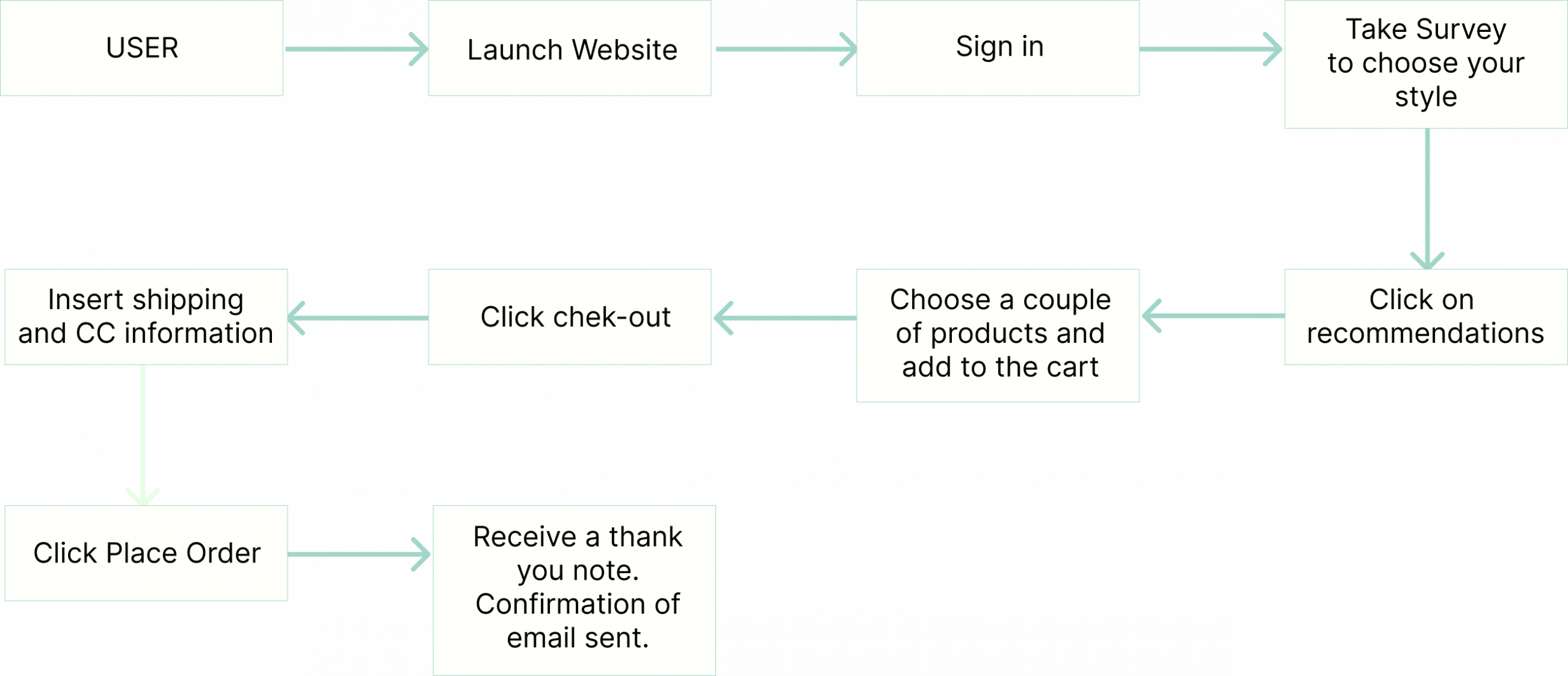
With these insights, I created a user journey map to visualize each step of the customer’s experience, from discovering products to completing a purchase. This helped identify opportunities to simplify the shopping journey and improve the overall user experience.
Conpetitive Inspiration
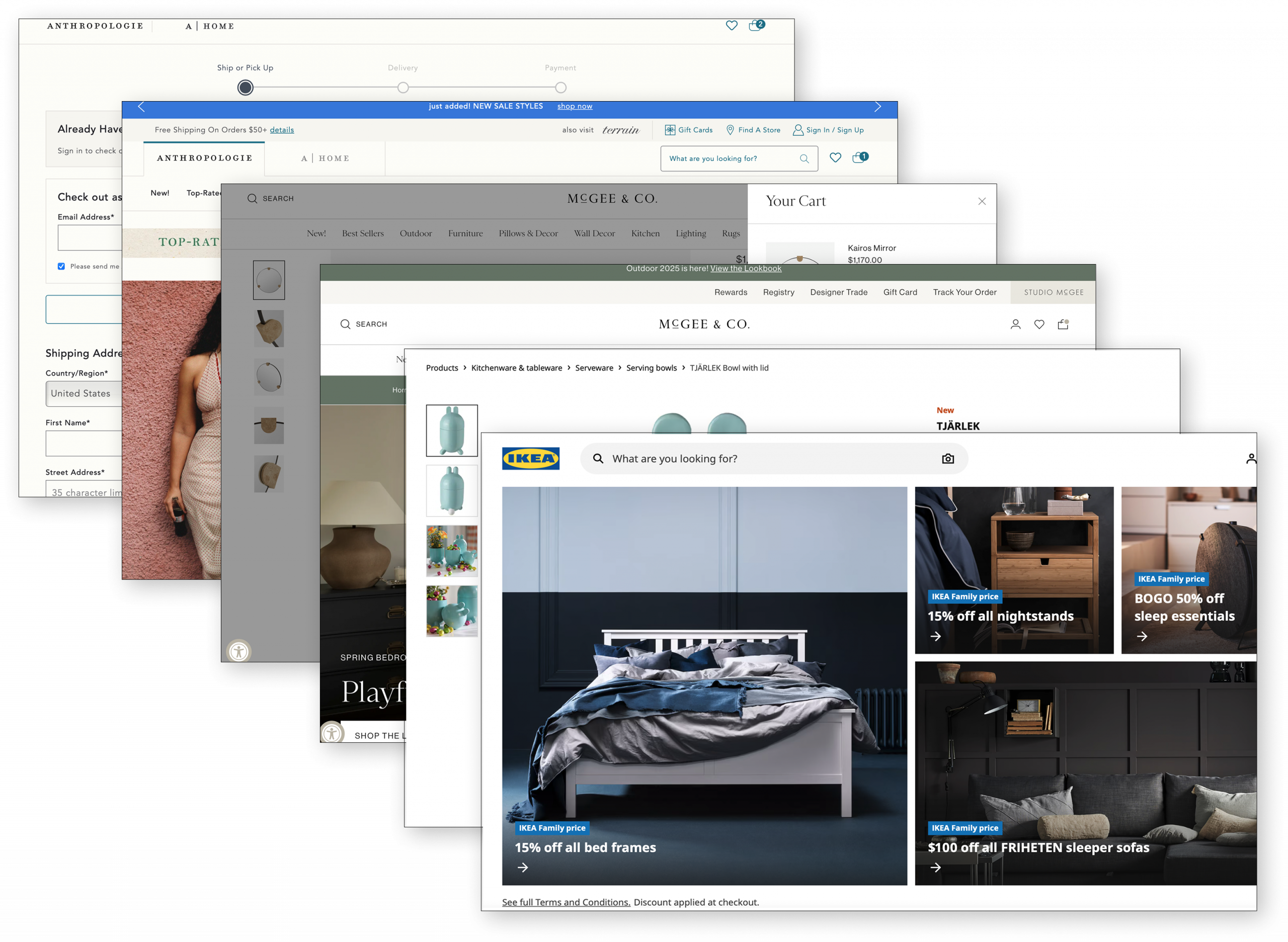
To help shape the House2Home experience, I analyzed brands that aligned with the project’s goals in terms of functionality, accessibility, and visual identity.
- IKEA inspired the concept of making great design accessible and affordable. Its focus on helping customers furnish their homes within a budget aligned closely with House2Home’s mission.
- McGee & Co. influenced the idea of offering interior design guidance. While the brand provides consultations with professional designers, I explored how a digital interior designer could deliver a similar experience in a more scalable and affordable way.
- Anthropologie served as inspiration for the visual direction of the app. Its warm, lifestyle-driven aesthetic influenced the color palette, typography, and overall design language, helping create an inviting and contemporary user experience.
Crazy 8’s
After gathering inspiration and defining the user flow, I completed an 8-minute Crazy 8s exercise to rapidly explore multiple design concepts. I sketched eight variations of the app’s most critical screen, the starting point for the digital interior design consultation, to generate and evaluate different layout and interaction ideas before moving into wireframes.
Solution Sketch
From the eight concepts, I selected the strongest solution and expanded it by designing the screens that came before and after it. I chose this concept because it best supported the website’s goals, providing a clean, intuitive experience with a simple, well-organized layout.

Storyboard
The website’s development was guided by an interview with Chelsea, a House2Home user. A dedicated studio page was created to better understand customers and assist them in selecting decor for their new home.
Using the user journey map and solution sketches as a foundation, the final pages took shape. I envisioned Chelsea’s experience from the moment she launched the website, mapping out each step to ensure a seamless and engaging journey.

Prototype
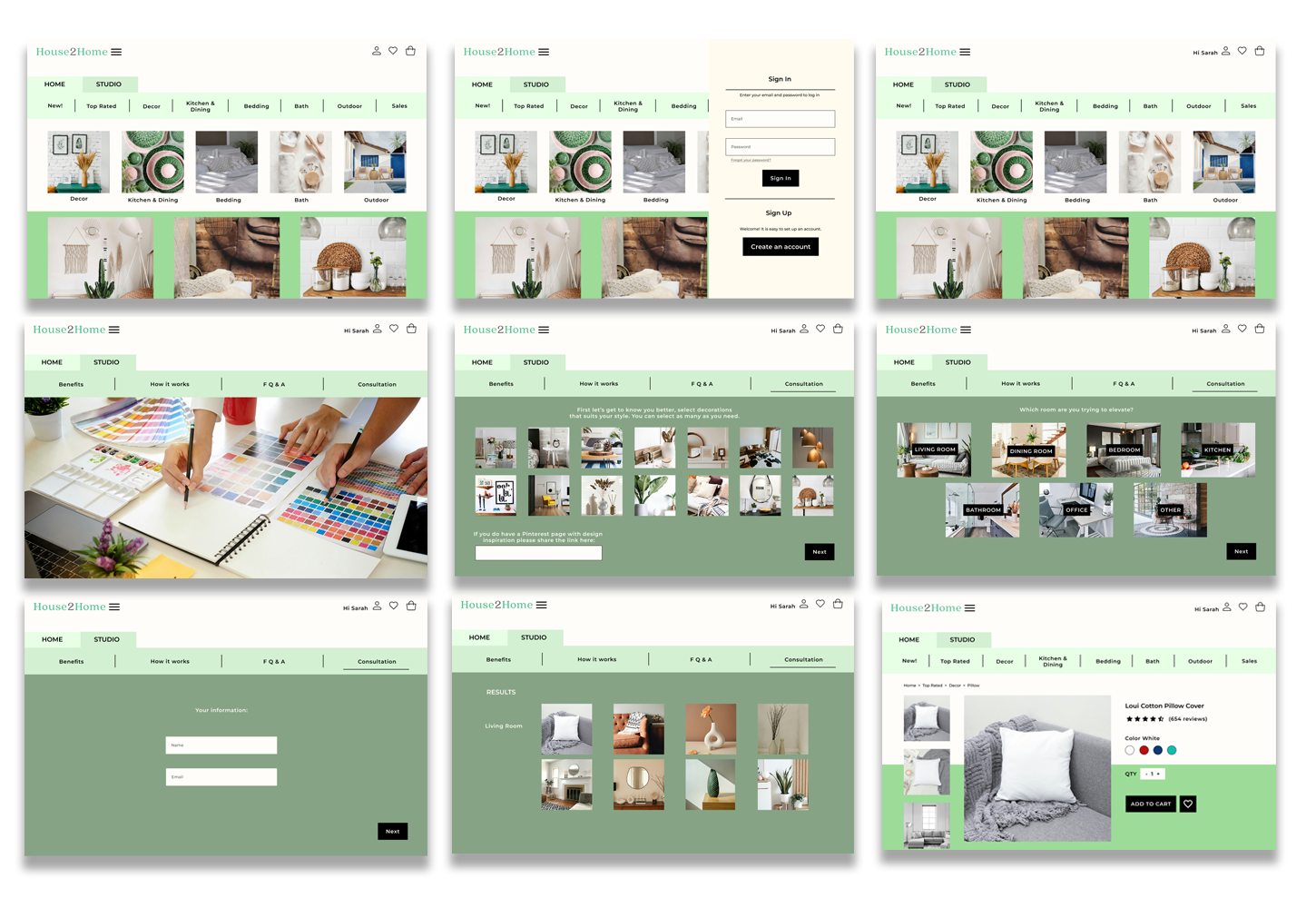
With the solution sketches finalized, I moved into the prototyping phase, transforming the concepts into an interactive experience. The prototype was designed in a single day, using the sketches as a foundation while adding additional screens as needed to complete the user journey.
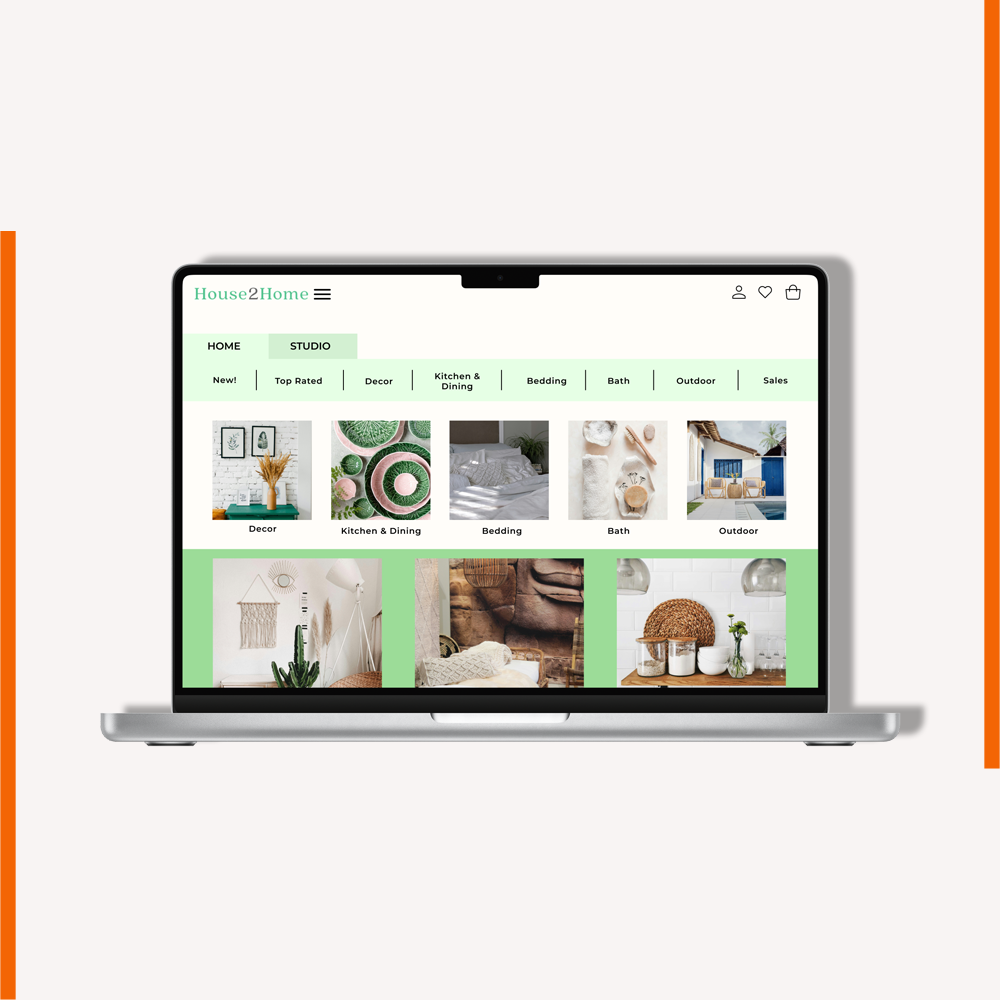
The visual design was inspired by nature, with a color palette that reflects growth, balance, and warmth. Clean, geometric layouts were paired with subtle rounded elements on key screens, such as checkout, to create a more approachable and reassuring experience.
Below are a few screens from the prototype.
User Interviews
Once the prototype was complete, I conducted moderated remote usability testing with five participants from diverse backgrounds to evaluate the website’s usability and overall experience.
Overall, participants found the website intuitive, visually appealing, and easy to navigate. The Design Studio feature was consistently highlighted as the most valuable aspect of the experience, with users appreciating the personalized guidance it offered when decorating a new home. Several participants commented that the website felt modern, well-organized, and would be a platform they would consider using for future home décor purchases.
The positive feedback validated the overall design direction and confirmed that the solution successfully addressed the needs identified during the research phase.
Reflection
The Design Sprint was a fast-paced and rewarding experience that reinforced the value of rapid problem-solving, collaboration, and user-centered design. Working within a structured framework challenged me to test ideas quickly, validate assumptions, and iterate based on user feedback.
My biggest takeaway was that great design goes beyond aesthetics—it is about creating thoughtful solutions that address real user needs while balancing functionality, usability, and business goals.
Interested in seeing more? Here are a few additional projects that showcase my design process, problem-solving approach, and experience creating user-centered digital products across different industries.